Plutonium (Pu, plutonium on the periodic table) is an AI assistant built on
Alchemy, dedicated to one job:
planning software development. It gives
project managers, product owners, and teams a plan they can trust, in a
fraction of the time, and keeps it current as reality changes.
Plutonium helps you characterize the context and the
assumptions your plan stands on, and then helps you
cut the most appropriate increments: small
enough to deliver, big enough to matter.
Like Cuprum, it works with you in a chat
next to the plan itself. You stay in control of every decision.
Planning in a ticket tracker alone is not enough
Tools like Jira are great at tracking work. They are much less help in
deciding what the work should be. Teams that plan only with them tend to
run into the same problems:
Too little detail
Tickets that say what, but not enough for anyone to build, test, or
sign off with confidence.
No time for the why
Work gets scheduled without anyone asking why it matters, who it is
for, or what would change if it succeeded.
No way to measure
Nobody states up front how success will be measured, so “done” ends up
meaning “shipped”, and the numbers that do get tracked are often
vanity metrics that look good without proving anything.
No way to decide
Without agreed criteria, persevere-or-pivot decisions drift or get
postponed until the money is spent.
Plutonium brings these questions into the planning conversation early,
when answering them is cheap. It helps you
avoid vanity metrics and choose measures
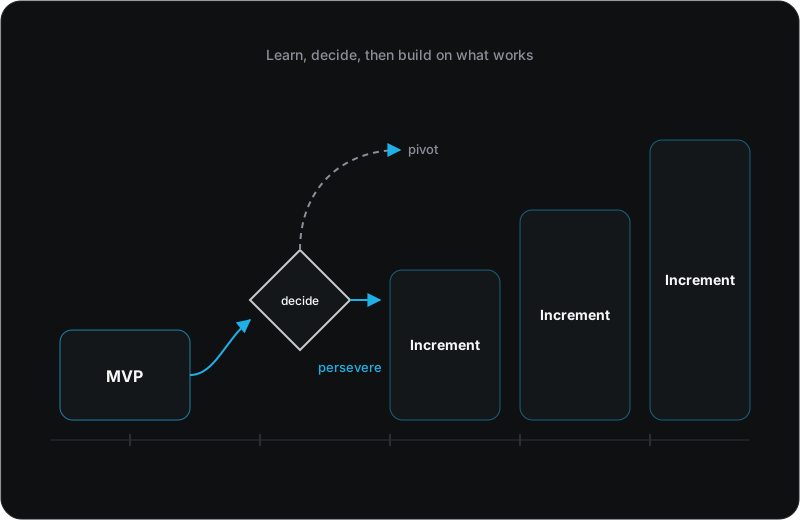
that matter, and it helps you decide whether to
persevere or pivot with evidence. Then it
hands the result to Jira and your other tools.
One assistant, three planning situations
Evolving a product you know well
Turn a clear direction into a sequenced plan of increments, ready to
execute and easy to explain to anyone who funds it.
Discovering a new product or its customers
Plan one or more MVPs so you
learn fast and decide with evidence, instead
of building on hope.
A known product with one bold bet
Deliver the core with confidence while giving your experimental
feature a fair, bounded chance to prove itself.
Why it pays off
From idea to plan in hours, not weeks
Skip the blank page. Plutonium drafts, you refine, and the team gets
to a shared plan sooner.
Fewer surprises along the way
Plans that are honest about what is known and what is not, so
the right decisions get made at the right time.
A plan that stays alive
When things change, replan in minutes and see exactly what moved and
why, instead of letting the plan quietly go stale.
A team sport, not a solo act
Business, product, and engineering work the same plan at once,
alongside Plutonium, in plain language. Comments live right where the
discussion belongs, and every rated suggestion quietly reshapes how
Plutonium works with your team next.
Built to work with the rest of your toolchain
Works well with Cuprum, and just as well without it
If your use cases, context, and domain are already modeled in
Cuprum, Plutonium builds on them
rather than asking you to start over. No Cuprum model? Plutonium works
fine on its own, gathering what it needs from you and your material.
Export to Jira, Excel, and the like
Export the plan to Jira and similar tools, so it becomes day-to-day
work for your teams, or to Excel sheets for everyone who plans,
budgets, and reports there.
Plutonium shares Alchemy’s founding principle:
AI amplifies human judgment, it doesn't replace it.