Iridium
Iridium (Ir, iridium on the periodic table) is one of the AI assistants built on Alchemy, dedicated to one job: knowledge management. It turns documentation scattered across your tools, and operational data locked inside your business systems, into something people can actually find and act on.
Vision
Iridium’s job is to be the one place institutional knowledge stays findable, no matter which tool it was written in or which system holds the operational record.
Documentation is rarely hard to find right after it’s written, it’s hard to find months or years later, scattered as it is across issue trackers, wikis, devops platforms, file shares. ERP, MES, and WMS systems add a variant of the same problem: the operational record is queryable, but disconnected from the documentation that explains or governs it. Iridium closes that gap, pairing runtime data with the documents that give it meaning.
One knowledge backend, several assistants
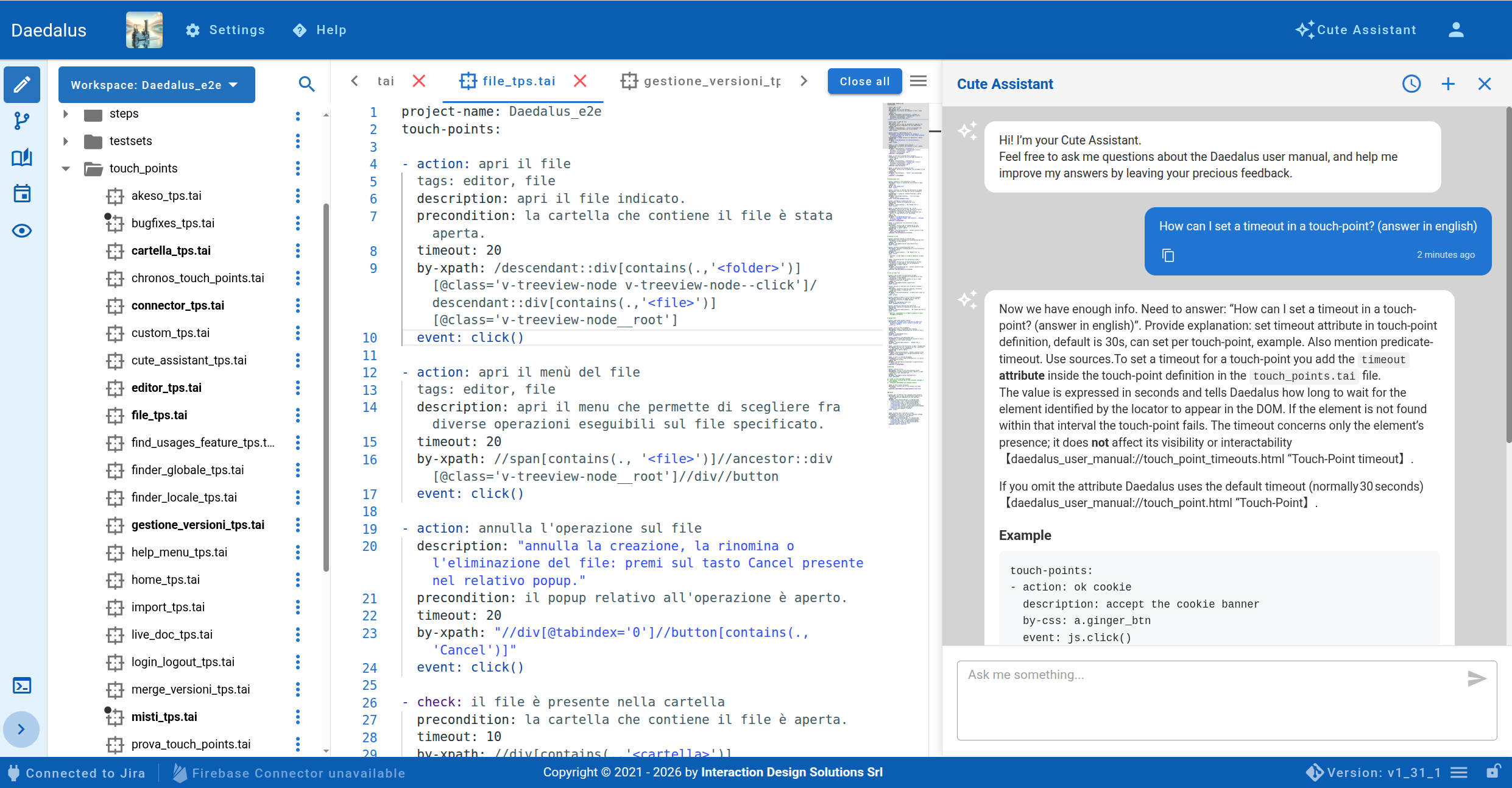
Iridium already works as infrastructure: a knowledge hub adopted across an organization, a shared backend behind several verticals.
Who Iridium changes things for
People finding what they need, every day
New hires find the right documents instead of learning the wrong way by trial and error, and the people who could teach them stop losing time repeating themselves. A delivery note or an invoice turns up by a keyword in its content, not just by the fields native ERP search covers, and semantic search means a query doesn't just fail when the obvious match isn't there.
Shop floor, warehouse, and quality teams
A scrap-rate spike or an alarm arrives together with the SOP or intervention threshold needed to act on it, in the language people on the floor actually use. An audit or a recall no longer means reconstructing a batch's path by hand: the batch, its certificates, and any non-conformance records come back as one verifiable answer, with view, edit, and remove privileges applied separately to original and synthesized documents.
Project leads and engineers
Starting a project with the relevant best practices already at hand avoids mistakes that are cheap to fix up front and expensive to fix later. An operational exception, or a task just assigned, arrives already linked to the procedure that governs it, instead of needing to be tracked down separately.
Decision makers and engineering teams
Institutional knowledge stops depending on who happens to remember where it lives, and stops costing your best people their time repeating themselves. The same retrieval backend that powers Iridium's own interface is available as an API, so a help-desk bot or any other assistant you build can rely on a maintained knowledge backend instead of a RAG pipeline built and kept up from scratch in house.
Customization options
Iridium adapts to how you already work:
Ingestion pipeline
Quality evaluation
Integrated UI
API for your own agents
Runtime connectors
Any LLM provider
The model is parametric, with token consumption and limits governable per customer, so that you’re not locked into one provider.
And that means support for on-premise LLMs too, for those who need to keep data and LLM traffic within their own infrastructure and security perimeter.